Mechanism, material properties, and tuning options
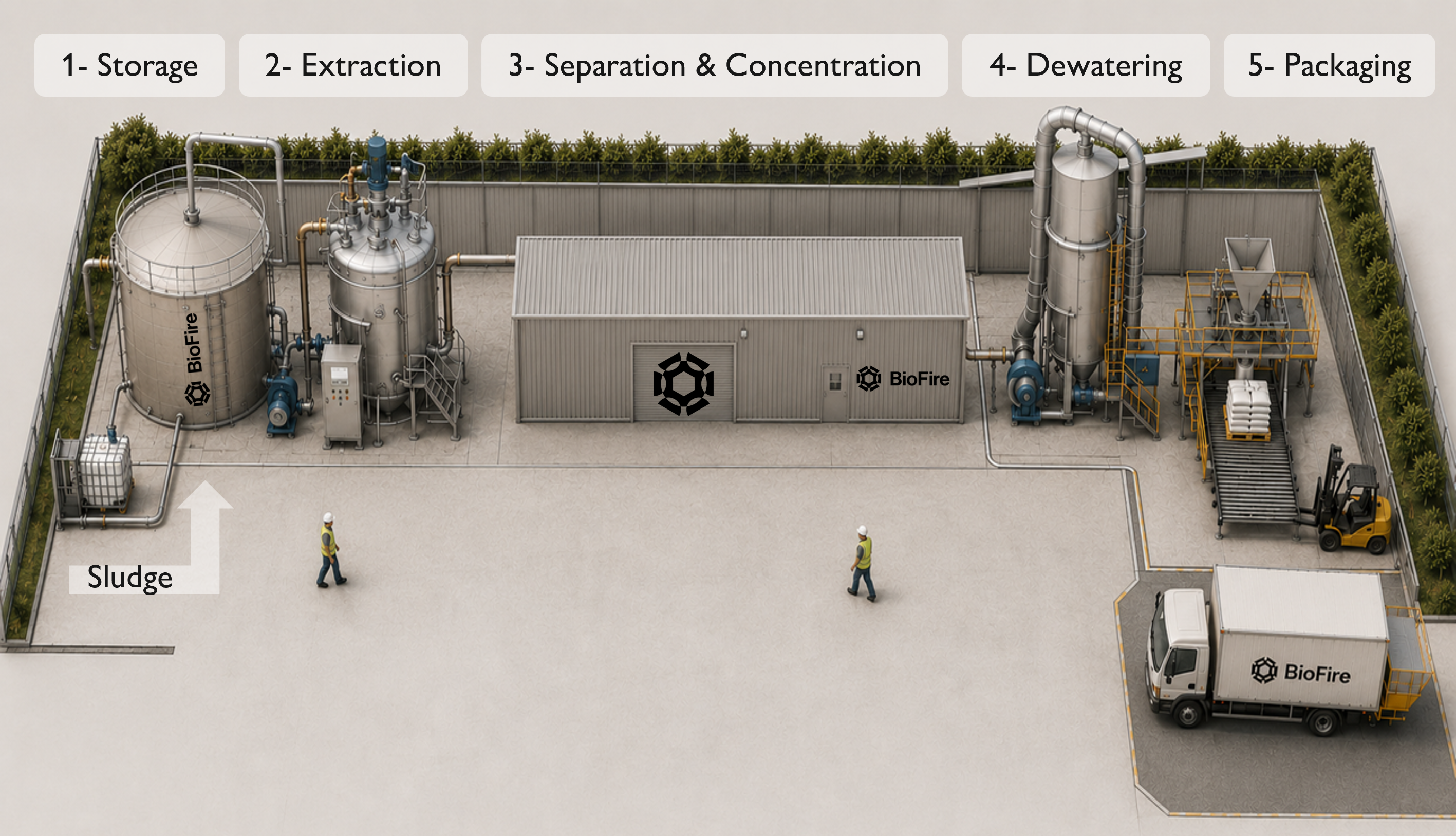
Modular production unit that converts wastewater sludge into functional biopolymers for the flame retardant industry.
Summary
BioFire is a functional biopolymer extracted from wastewater biomass (bacterial extracellular polymeric substances, EPS) and processed into a flame-retardant ingredient for polymer systems. It is designed to integrate into formulations with minimal disruption while delivering multi-mechanism fire protection.
UncoatedCoated with synthetic flame retardantCoated with BioFire (achieves flame retardancy through charring)
Test subject: cork
Flame application time: 10 seconds (applied equally to each sample)
Cork is widely used in construction and transport industries as insulation material
UncoatedCoated with synthetic flame retardantCoated with BioFire (prevents dripping and maintains structure)
Test subject: PET foam
Flame application time: 10 seconds (applied equally to each sample)
PET is widely used in construction and transport industries as insulation material
Development Approach
Fire performance must be validated in the final product as the interaction with the base material affects performance. We co-develop formulations with partners (you) and test against the relevant standards for the target market e.g. EN 13501, EN 45545, etc.
Flame-Retardant Mechanism
Condensed-phase protection forms a stabilizing char layer that insulates and slows heat and mass transfer.
Synergy from composition: proteins, polysaccharides, and inorganic fractions contribute to the combined response.
Material Properties
Bio-based, carbon-rich polymeric material
Thermally reactive with strong char-forming behavior
Compatible with thermoset systems and composite formulations
Designed to balance fire performance with processability
Product Formats & Tuning
Dry powder for compounding mixing e.g. extrusion
Aqueous dispersion for coatings and/or impregnations
Available across pH range (pH 2 - 10)
Adjustable formulation for salt sensitive applications
Water soluble
Get More Details
Interested in learning more about our material specifications?